Research publication
Learning by making — med-ed research line (AACA poster + BMC paper)
Year-one CCEB collab on creative models for preclinical learning — named on AACA 2024 poster #159051 as Vasanth Sree Ram, in the same LKCMedicine research line that published the BMC Medical Education systematic review on student-made models (doi:10.1186/s12909-025-06716-8).
Year one of Bioengineering. The long conference form of my name — Vasanth Sree Ram — sits on an AACA poster. The journal end of the same research line is a BMC Medical Education paper on learning by making.
That is the contribution stack: qualitative / conference work with my name on the board, and a peer-reviewed systematic review from the LKCMedicine group on student-made models and creative projects in medical education.
Journal publication (where the literature contribution landed)
| | |
|---|---|
| Title | Learning by making – student-made models and creative projects for medical education: systematic review with qualitative synthesis |
| Journal | BMC Medical Education (2025) 25 |
| Published | 29 Jan 2025 |
| DOI | 10.1186/s12909-025-06716-8 |
| Open access | Springer / BMC article |
| Authors (journal) | Tan Yong Yi · Panwar Shreyans · Ranganath Vallabhajosyula |
| Affiliation spine | Department of Anatomy, Lee Kong Chian School of Medicine, NTU |
What the paper asked
Student-centered and unconventional teaching is spreading in medical education. One path is having students produce creative projects to learn preclinical topics. The review asked what that does to metacognition and knowledge gains.
How they looked
Systematic search across MEDLINE, Embase (Ovid), PubMed, CINAHL, Web of Science, Cochrane CENTRAL, and Scopus — 1 Jan 1995 → 6 Jul 2023. Quantitative, qualitative, and mixed-methods studies on creative project-based lessons and medical-student outcomes. Dual screening, narrative synthesis, content analysis for codes/themes, quality via the Mixed Methods Appraisal Tool.
What they found
17 studies (2010–2022). Interventions included handicraft models, drawings, concept maps — across anatomy, histopathology, and fundamental sciences.
Themes of Enhanced Learning, Collaborative Learning, and Deep Learning branched into engagement / disengagement (students and faculty). Collaborative learning meant teams plus real mentorship. Creative projects supported deep-learning goals through interdisciplinary work and new ways of seeing concepts. Learning improved via interactivity, high conceptual fidelity, and better retention.
Conclusion (paper)
Creative projects can carry collaborative and deep-learning objectives through self-directed learning, cognitive-load modulation, and metacognitive behaviour. Faculty mentorship and peer groups help. Costs are real: high task demand, cognitive/emotional load, mismatch with some students’ professional identity. Overall reception was good enough to keep exploring in curricula.
PMID 39881268 · PMC PMC11776224
Conference artifact (where my name is on the board)
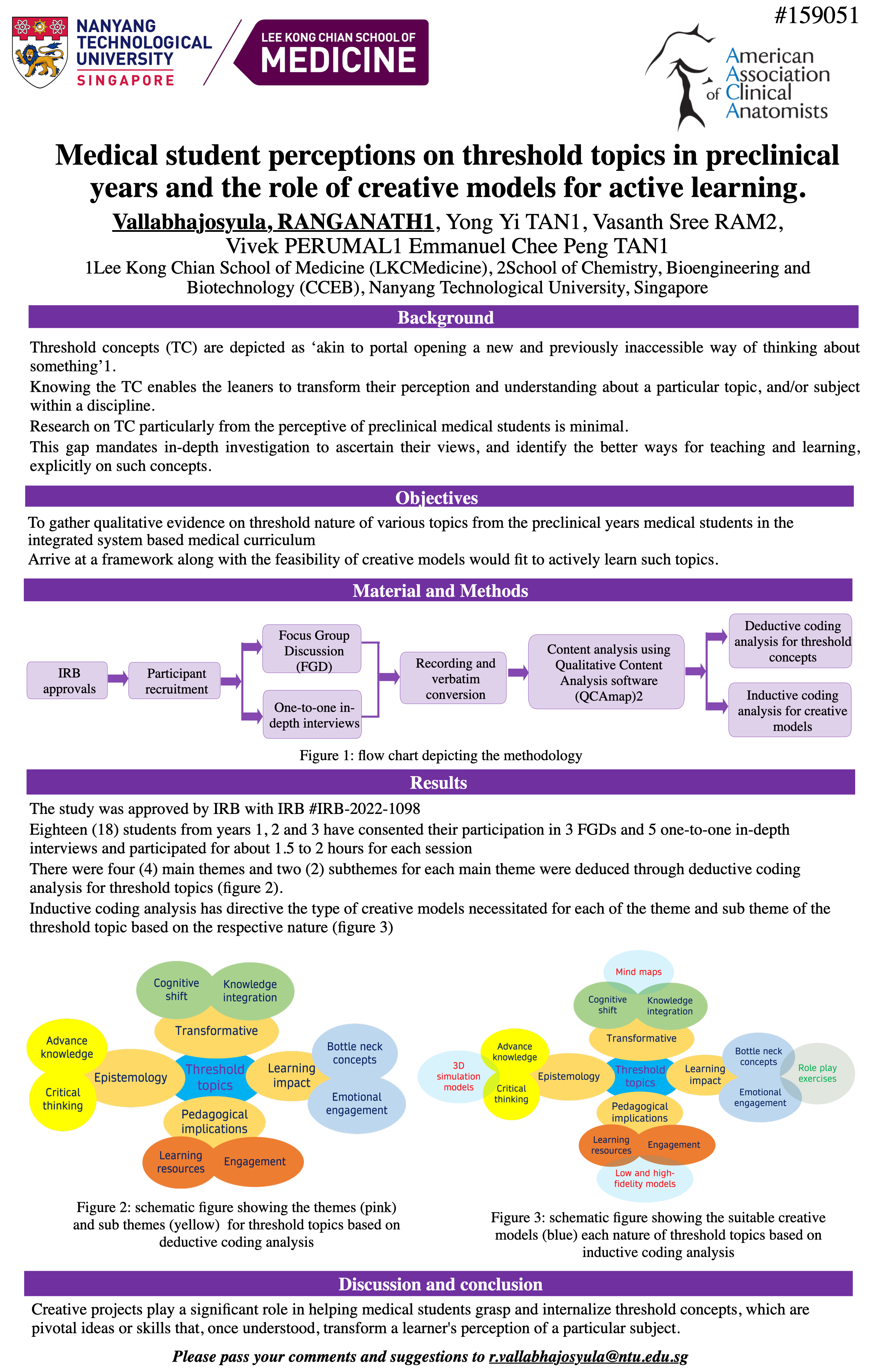
Same research world — threshold topics, creative models, preclinical medical students — presented at AACA 2024 (New York).
| | |
|---|---|
| Poster title | Medical student perceptions on threshold topics in preclinical years and the role of creative models for active learning |
| Venue | AACA 2024 — American Association of Clinical Anatomists (New York) |
| Poster no. | #159051 |
| IRB | IRB-2022-1098 |
| Author line | Vallabhajosyula Ranganath · Yong Yi Tan · Vasanth Sree Ram · Vivek Perumal · Emmanuel Chee Peng Tan |
| Homes | LKCMedicine · CCEB (NTU) |
| My seat | CCEB, year-one Bioengineering collaborator |
| Program PDF | AACA 2024 full program — search Vasanth |
Poster question
Threshold concepts are doors, not just “hard exams.” Meyer & Land’s portal language: once you cross, you cannot un-see the room. The poster asked what preclinical students in an integrated systems curriculum experience as threshold-shaped, and which creative model types fit each nature of stuck point.
Poster methods (spine)
- IRB IRB-2022-1098
- 18 students, years 1–3
- 3 FGDs + 5 one-to-one interviews (~1.5–2 h each)
- Deductive coding → four main themes × two subthemes
- Inductive coding → creative-model map matched to theme nature
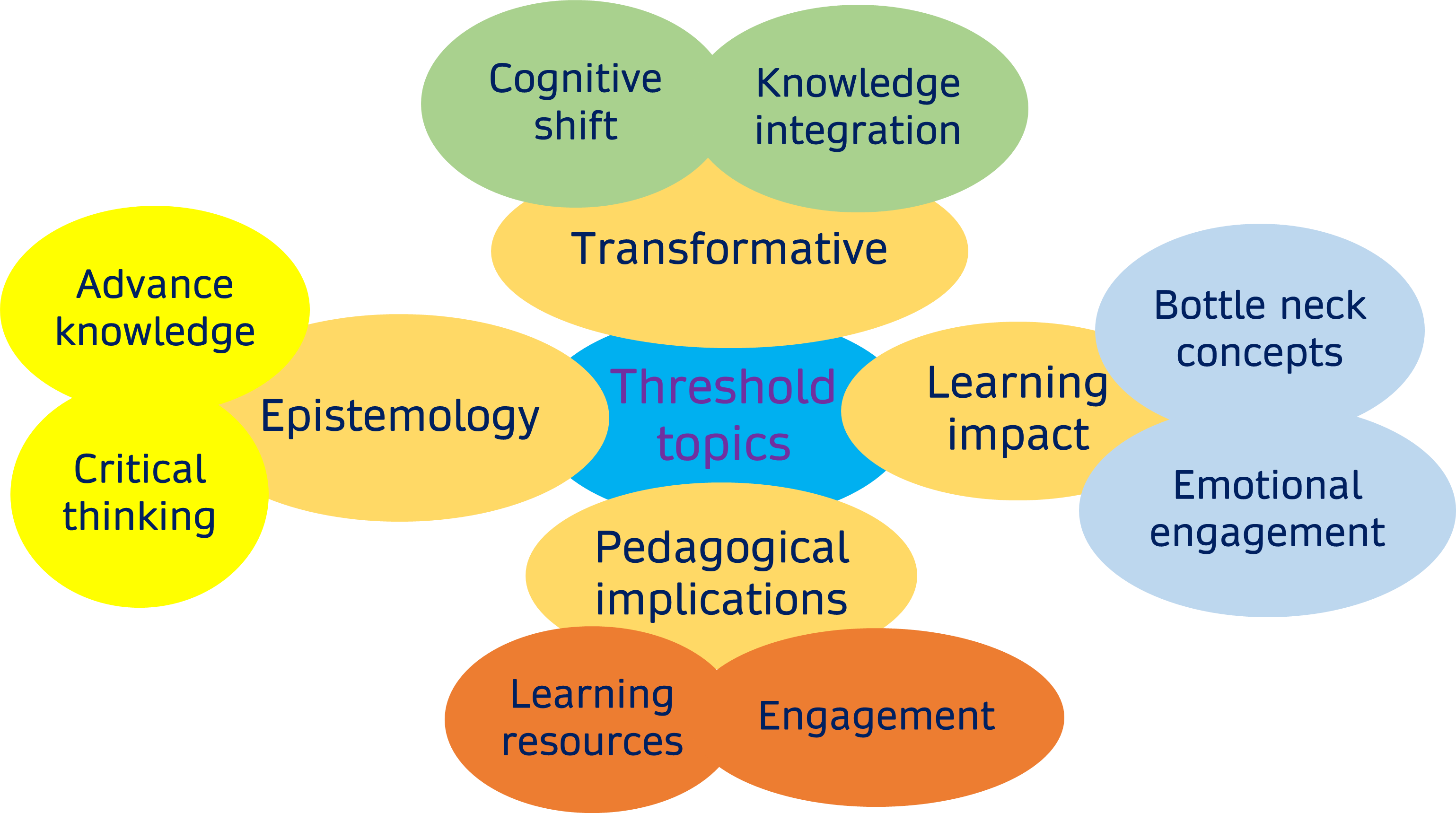
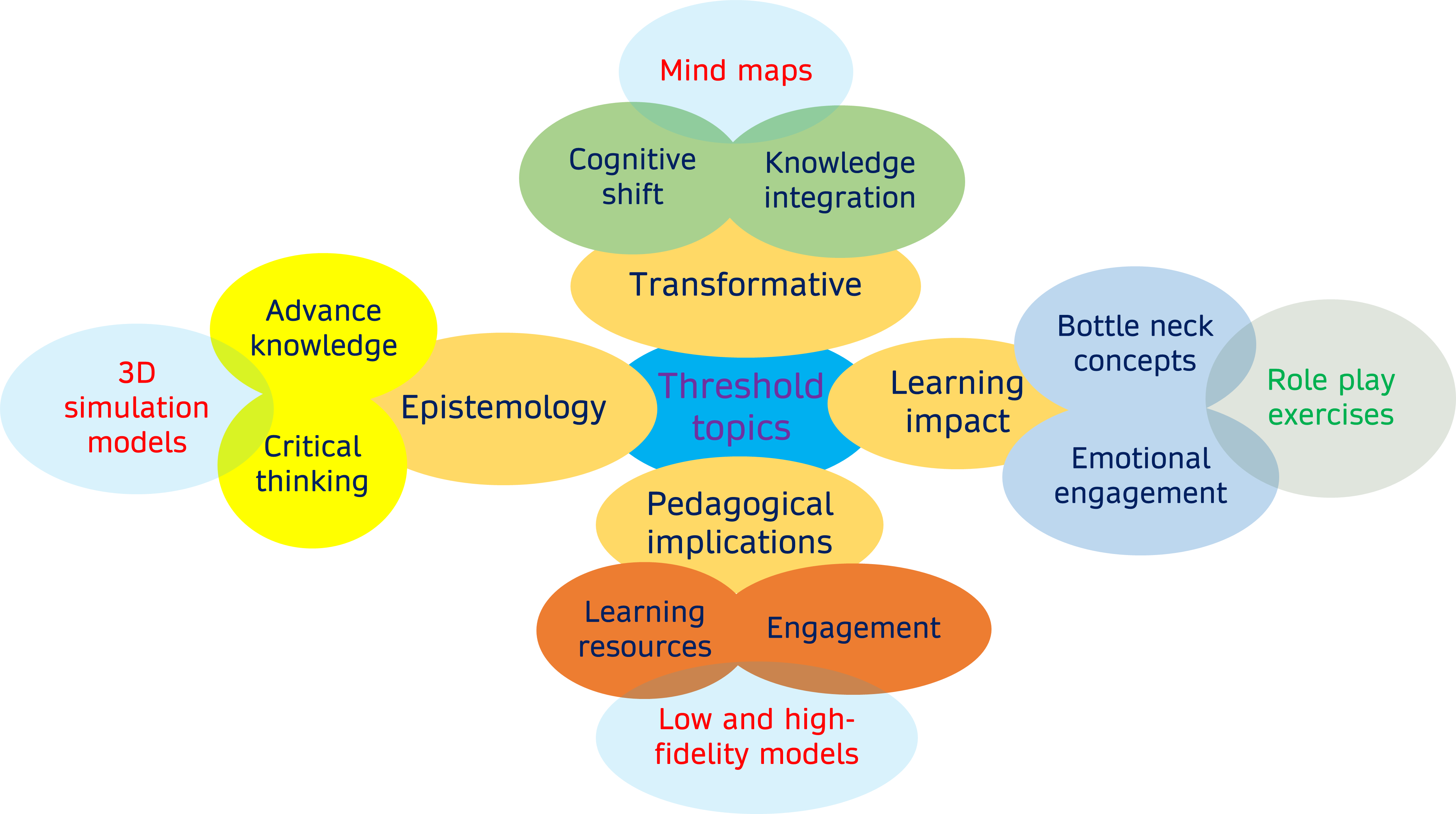
Operational claim on the board: creative projects help internalise threshold concepts when the model matches the nature of the stuck point — not when it is decoration.
How the two pieces relate
| Layer | Artifact | Role |
|---|---|---|
| Literature | BMC Med Educ systematic review (2025) | Peer-reviewed synthesis of creative project-based learning outcomes across 17 studies |
| Conference / named collab | AACA 2024 poster #159051 | Qualitative threshold + model framework; Vasanth Sree Ram on the author line |
| Group | LKCMedicine anatomy / med-ed (Vallabhajosyula lead) + CCEB | Same creative-models / preclinical learning problem space |
I do not claim journal co-authorship on the BMC paper — Crossref lists Tan, Panwar, Vallabhajosyula. My named contribution in this line is the AACA poster and the year-one CCEB side of that collaboration. The Springer/BMC article is the related publication where the broader learning-by-making contribution sits in the literature.
Why this page exists
I build agents and grading products now. This page is the research shelf: a real DOI, a real poster, a real IRB number, and an honest map of where my name does and does not appear.
Pattern I still run:
- sit next to a domain that is not software
- take measurement and synthesis seriously
- keep the citable artifact next to the named one
Research publication page — not a Writing-log field note.
PI contact from the poster era: r.vallabhajosyula@ntu.edu.sg
Now: vas@lintlabs.org